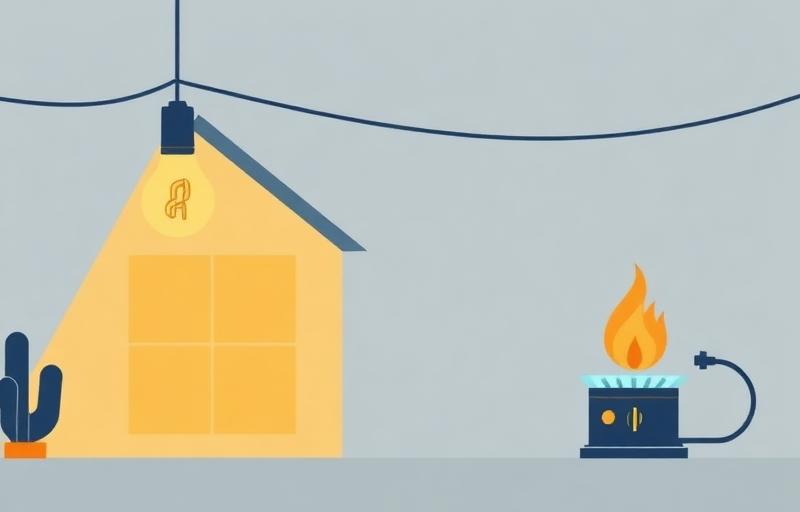
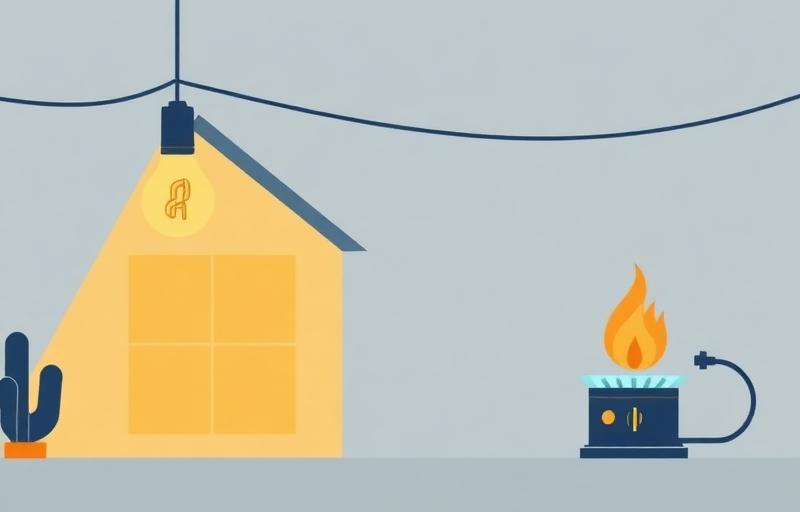
As the UK navigates the middle of the decade, the landscape of household energy has shifted dramatically from the crisis years of 2021 and 2022. For many households, the question of whether to stay with a current provider or seek a new deal has become a critical part of annual financial planning. As we look toward 2026, the energy market is entering a new phase of stability, but with that stability comes a fresh set of complexities regarding wholesale prices, government policy, and the transition to renewable tech.
Many consumers still feel a sense of hesitation when it comes to switching. After years of being told that "there are no deals better than the price cap," the narrative is changing. In 2026, the benefits of switching are no longer just about a cheaper unit rate per kilowatt-hour; they are about finding a service model that fits a modern, increasingly electrified lifestyle. Whether you are charging an electric vehicle, using a heat pump, or simply trying to shave £100 off your annual spend, understanding the 2026 energy market is essential.
The State of the Energy Market in 2026
To understand if switching is worth it, we first need to look at the environment. By 2026, the UK’s energy infrastructure has integrated significantly more renewable generation. This means that while wholesale prices are less volatile than they were during the natural gas spikes, they are more "weather-dependent."
The Ofgem Price Cap remains a fixture of the industry, acting as a backstop to prevent customers on standard variable tariffs (SVTs) from being overcharged. However, the gap between the Price Cap and the most competitive fixed-rate deals has widened. In 2026, suppliers are aggressively competing for customers again, offering incentives that go beyond basic pricing. We are seeing a resurgence of innovative tariffs that reward households for using energy at specific times of the day, moving away from the "one size fits all" approach of previous decades.
Why Switching is Making a Comeback
For a long period, "staying put" was the safest advice. In 2026, that is no longer the case. Here is why the "Switching Season" has returned in full force:
* **The Return of Fixed-Rate Security:** Suppliers are now offering 12-month and 24-month fixed deals that sit comfortably below the projected Price Cap. For households on a tight budget, the ability to lock in a price provides invaluable peace of mind against global geopolitical shifts. * **Specialised EV Tariffs:** With the 2030/2035 deadlines for petrol and diesel cars approaching, more UK homes have EVs. Switching to a provider that offers "off-peak" overnight charging rates can save an average driver hundreds of pounds a year compared to a standard tariff. * **Smart Export Guarantees (SEG):** If you have installed solar panels, switching to a supplier that offers a higher export rate for the excess energy you send back to the grid can effectively turn your home into a mini power station. * **Customer Service Standards:** The post-crisis era saw several smaller, low-quality suppliers exit the market. The remaining players are now competing on service quality, app functionality, and "green" credentials.
Comparing Different Tariff Types in 2026
When you begin your search on a comparison site like Bills Knight, you will encounter several different types of energy products. Knowing which one suits your lifestyle is the key to a successful switch.
* **Fixed-Rate Tariffs:** These lock in the price you pay per unit (kWh) for a set period. In 2026, these are ideal for those who want protection against inflation and market fluctuations. * **Standard Variable Tariffs (SVT):** These are governed by the Ofgem Price Cap. While they offer flexibility (usually no exit fees), they are often the most expensive way to pay for energy over the long term. * **Time-of-Use (ToU) Tariffs:** These use smart meter data to charge you different rates at different times. If you can run your dishwasher or charge your car at 3:00 AM, these tariffs offer the lowest possible rates available in 2026. * **Green Tariffs:** These ensure that the energy you buy is matched by the supplier purchasing renewable energy from generators. By 2026, many of these are parity-priced with "brown" energy, meaning it costs no extra to be eco-friendly.
Is it Worth Switching from the Price Cap?
The Ofgem Price Cap was designed as a safety net, not a target. In 2026, being on the Price Cap usually means you are paying the "default" rate. Historical data and current market trends suggest that those who actively switch away from the default tariff to a competitive fixed or managed deal can save between 10% and 15% on their annual bills.
However, switching isn't just about the lowest number on the screen. It’s also about avoiding the "loyalty penalty." Many suppliers rely on customers forgetting their fixed term has ended, at which point they are automatically moved to the more expensive standard variable rate. By proactively switching in 2026, you ensure you never spend a day paying more than necessary.
Practical Steps for a Successful Switch
Our step-by-step guide to switching energy suppliers covers each stage in detail. If you haven't switched energy suppliers in a few years, the process has become significantly faster and more automated thanks to the "Energy Switch Guarantee." Here is how to approach it:
**Gather Your Data:** Look at your most recent annual statement. You need to know your annual consumption in kWh, not just what you pay in pounds, as prices fluctuate.
**Check for Exit Fees:** If you are currently on a fixed deal, check if there is a penalty for leaving early. Usually, if you are within the last 49 days of your contract, you can switch without paying a fee.
**Check Your Smart Meter Compatibility:** Most 2026 tariffs require a second-generation (SMETS2) smart meter. Ensure your hardware is up to date to access the best "Time-of-Use" deals.
**Use a Comparison Engine:** Enter your details into a trusted comparison tool like Bills Knight to see a side-by-side view of the market.
**Look Beyond the Monthly Payment:** Some suppliers set "low" monthly direct debits to look attractive, only for you to end up in debt later. Always compare the unit rate and standing charge.
Factors to Consider Beyond the Price
While saving money is the primary motivator, 2026 has brought other factors to the forefront of the decision-making process.
The Standing Charge Issue
The standing charge—the fixed daily fee you pay regardless of how much energy you use—has been a point of contention in the UK. When switching, look for suppliers that have managed to keep their standing charges low, especially if you live in a small apartment or are a low-energy user.
Digital Experience and Apps
In 2026, the ability to track your energy usage in real-time is a powerful tool for lowering costs. Some suppliers offer advanced apps that integrate with smart home devices, allowing you to turn off appliances remotely or see exactly which device is spiking your bill. A supplier with a poor app may cost you more in the long run by making it harder to manage your consumption.
Modern Customer Support
The "worth" of a switch is often proven when something goes wrong. Look at recent customer satisfaction ratings. In 2026, several "challenger" brands have consistently outperformed the "Big Six" in terms of call waiting times and dispute resolution.
When Should You NOT Switch?
It is equally important to know when to stay put. Switching might not be the right move if:
* **You are in significant debt to your current supplier:** Most suppliers will block a switch if you owe them money (usually over £28 for more than 28 days), unless it’s their error. * **You have a highly specialised "legacy" meter:** Some older multi-rate meters can be difficult to migrate, though this is becoming rarer in 2026 as smart meter rollouts conclude. * **The exit fees outweigh the savings:** If you have six months left on a fixed deal and the exit fee is £150, but the new deal only saves you £10 a month, it’s better to wait until your "switching window" opens.
What the Future Holds: Looking Toward 2027
As we move through 2026, the trend is toward "decentralised" energy. We are seeing more community energy schemes and peer-to-peer trading. By switching now to a forward-thinking supplier, you are positioning yourself to take advantage of these future technologies. Staying with an old-fashioned provider on a stagnant tariff may leave you behind as the UK grid becomes smarter and more reactive.
The government’s "Net Zero" building regulations also mean that home energy efficiency is tied more closely to your energy provider. Some suppliers are now offering "bundled" deals that include discounts on heat pump installation or home insulation for loyal customers on specific tariffs.
Making the Most of Bills Knight for Your 2026 Switch
The 2026 energy market is no longer a place of fear; it is a place of opportunity. The "worth" of switching is found in the combination of lower rates, better technology, and superior service. You no longer have to accept the default price set by a regulator; you have the power to choose a plan that aligns with your budget and your values. You can compare gas and electricity tariffs to see what's available for your home.
By taking ten minutes to review your options, you could uncover substantial savings that remain hidden if you stay on a standard variable tariff. In an era where every penny of the household budget counts, neglecting your energy bill is simply leaving money on the table.
Conclusion: Is it worth switching in 2026? The answer is a resounding yes. With the market stabilising and new, innovative tariffs hitting the shelves, there has never been a better time to take control of your utility costs. Visit BillsKnight.com today to compare the latest energy deals and see how much you could save by making the switch. From green energy to EV-friendly plans, we help you find the perfect fit for your home and your wallet.